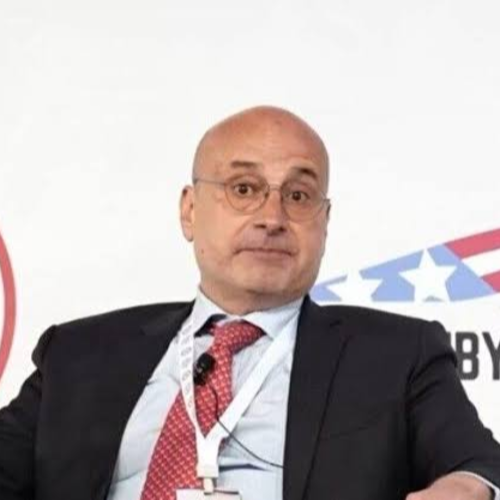
At a time when Libya is going through an acute power cut crisis manifested in 12-hour power cuts and blackouts, demonstrations and roadblocks, the barricading of government ministries by frustrated youth and their storming of the Mellitah Gas Complex to halt gas exports to Italy, FINTEC CEO and former banker Naaman Elbouri asks why the newly built Tobruk power station is operating at only a quarter of its potential because essential supporting infrastructure was not delivered alongside the plant.
On a wider perspective, Elbouri questions whether this failure is simply poor planning and bad management or a deeper systemic failure in the way major infrastructure projects are conceived, coordinated, and executed in Libya?
‘‘In 2018, the state General Electricity Company of Libya (GECOL) contracted Greek company METKA (the business unit of Mytilineos / Metlen) to build a 780 MW power station in Tobruk.
The project consists of four (GE) gas turbines with a total installed capacity of 780 MW. The total contract value for the civil works, installation, and commissioning was approximately USD 400 million.
Today, the power station is complete, and all four turbines have been installed. However, two critical elements were overlooked during the planning phase.
Planning failures
First, GECOL failed to provide the extra finances of 50 million USD to complete the plant increasing the fuel capacity storage, the Gas insulated switchgear (GIS) Station building to cover the plant and the administration building with the control room.
Failing to do so has resulted in having enough fuel storage tanks for 2 turbines rather than the entire 4 turbines installed
Second, GECOL failed to complete the construction of the 400 KV line from Tobruk to Marawa substation and then on to Sidi Hemri on the National grid.
As a result, the existing transmission network can carry only 200 MW, despite the power station having an installed capacity of 780 MW. Consequently, the station is currently operating at only 25% of its capacity, leaving the remaining generation idle. What is even more surprising is that upgrading the transmission line would reportedly cost no more than USD 40 million.
With an appropriately designed transmission line, the transfer capacity could increase to approximately 1 GW, providing enough capacity not only for the current power station but also for future expansion.
In other words, an additional investment of roughly USD 90–100 million would have enabled the country to utilise the full 780 MW of installed generation capacity while also creating room for future growth.
Inadequate planning and poor project management
This is a clear example of how inadequate planning and poor project management can undermine a major infrastructure investment.
At a time when Libya is suffering from severe electricity shortages, a newly built power station is operating at only a quarter of its potential because essential supporting infrastructure was not delivered alongside the plant. The result is that, by failing to invest approximately 25% more in the overall project, the country is extracting only 25% of the value of a USD 400 million investment.
Can this be described simply as poor planning and bad management, or does it point to a deeper systemic failure in the way major infrastructure projects are conceived, coordinated, and executed in Libya?''
Naaman Elbouri is the former Chairman of the privately owned Libyan bank, ATIB Bank. He is currently the Chairman of Tadawul, Libya’s leading private sector FINTEC company. He writes this article in his private capacity.
METKA and GECOL Sign MoU for 736MW Tobruk Power Plant
Greek firm METKA to build $380m power plant in Tobruk
Libyan Business Council Calls for Electricity Sector Reform
Proposal: Transitioning Libyan Electricity Subsidies to Solar Investme
Libya's Power Crisis: Fuel, Pricing, and Policy Challenges
NOC: Only 10% of Eni’s Gas Share Exported via GreenStream in Summer