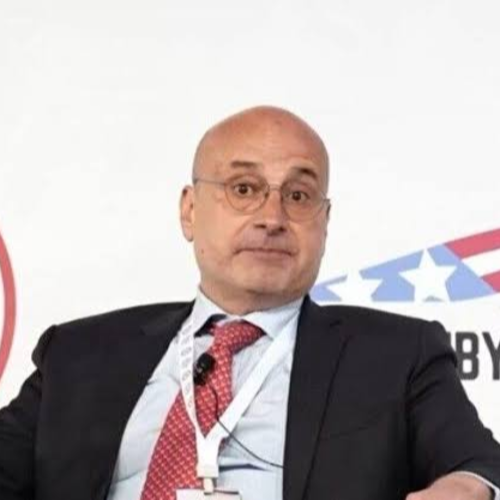
Despite the Libyan Court reversing in April 2024 the Central Bank of Libya (CBL) Decision No. 103 of 2 May 2023 removing the Directors of Assaray Trade and Investment Bank (ATIB) – the current CBL Governor and his Board of Directors have failed to implement the court ruling by redressing the Chairman and its Board of Directors.
It will be recalled that in 2023, the then Governor of the CBL, Saddek El-Kaber, issued Decision No. 103 of 2023, removing the Board of Directors of ATIB, chaired by Naaman Elbouri, and appointed an Interim Management Committee in its place.
The CBL, through its Governor and its Board of Directors have the legal authority to oversee banks in Libya, including suspending boards and chairpersons – as long as there are legal grounds.
However, the court subsequently found insufficient legal grounds for removing the Board of Directors and suspended the implementation of Decision No. 103 of 2023.
Former ATIB chairman Naaman Elbouri - while hailing Libya's legal process - addresses the legal and business dynamics between the CBL and the commercial banks under its stewardship - and this CBL injustice in the following piece:
''Justice may be delayed… but in the end, it prevails.
For more than three years, I chose to fight my battle through one channel alone: the law and the courts.
Not because this was ever a personal battle or a desire for revenge, but because the Libyan judiciary has demonstrated once again that no administrative decision, no official, and no institution should be above the law.
In 2023, the then Governor of the Central Bank of Libya issued Decision No. 103 of 2023, removing the Board of Directors of Assaray Trade and Investment Bank (ATIB), which I chaired, and appointing an interim management committee in its place.
We challenged that decision—not through the media or by settling scores, but before the competent court.
And the court ruled in our favour.
The court found insufficient legal grounds for removing the Board of Directors and suspended the implementation of Decision No. 103 of 2023.
But this issue is now bigger than ATIB, bigger than its Board, and bigger than me personally.
Court judgments must be respected and implemented.
I had believed that the Central Bank of Libya, as an institution whose authority derives from the law, would be among the first to respect judicial rulings and take the initiative to implement them.
That is why I address this message to the former Governor, under whose tenure these decisions were issued, and to the current leadership of the Central Bank of Libya:
The dispute was brought before the courts, and the judiciary has spoken. What is required now is no further argument, but respect for—and implementation of—the court judgments.
There is another aspect of this case that affected me personally.
Allegations were made against me, and my case was referred to the Office of the Attorney General. I appeared before the competent authorities and underwent the legal procedures, confident that the facts and evidence would ultimately determine the outcome.
Now, the legal statement issued by Zahaf & Partners on 1 October 2026, following a review of the relevant records and consultation with the judicial and prosecutorial authorities concerned, confirms that the allegations against me were unsupported by evidence and that the matters were closed without criminal proceedings being brought against me.
The statement also confirms, based on a statement issued by a prosecutor at the Office of the Attorney General on 14 September 2026, that there are no ongoing criminal investigations or prosecutions, outstanding arrest warrants, or other criminal proceedings against me relating to these allegations.
For me, this is about more than clearing my name.
It affirms a far more important principle:
Individuals and institutions may make accusations, but the evidence and the courts have the final say.
Justice may be delayed.
A person may pay a heavy price in reputation and professional prospects while waiting for it.
But the passage of time does not make a decision lacking legal grounds lawful, nor does it turn an allegation unsupported by evidence into a fact.
However long the road, justice will ultimately prevail.
I extend my sincere thanks and appreciation to Zahaf & Partners and its legal team for their professionalism, perseverance, and extensive work throughout this case, and for issuing this statement, which clearly sets out the legal and judicial facts for everyone to see.
I also extend my respect and appreciation to the Libyan judiciary and the competent judicial and prosecutorial authorities for their professionalism and fairness in examining the facts and evidence, free from other considerations.
Today, I am not celebrating a victory over individuals.
I am celebrating a far more important principle:
No individual, no governor, no board of directors, and no institution is above the law.
I hope that the Central Bank of Libya will now demonstrate its respect for this principle and take the initiative to implement the court judgments.
Justice may be delayed… but in the end, it has the final word''.
Libyan Court Overturns Central Bank Suspension of ATIB Board
ATIB Maintains Institutional Resilience Despite Board Suspension
Central Bank of Libya Suspends Board of Assaraya Trading and Investment Bank
Assaray Trade and Investment Bank Thwarts LD 3.9 Million Embezzlement
Libya’s Banking System on the Verge of Collapse, Expert Warns
Libya's ATIB Bank Accelerates Digital Transformation with Temenos Cloud
ATIB Introduces Libya's First Biometric Identification Banking System
ATIB Expands Presence in Benghazi with New Regional HQ and Microfinance Launch
Assaray Trade and Investment Bank Launches IPO to Raise Capital to LD 100 Million
Libya's E-Payment Push: Tadawul Tech and ATIB Tackle Cash Crisis
Assaray Trade and Investment Bank Announces Expansion into Benghazi
Libya Requires Systemic Institutional Reform, Not Just Personnel Chang
Libya Needs Oil Sector Institutional Reform to Hit Production Targets
Proposal: Transitioning Libyan Electricity Subsidies to Solar Investme
Tobruk Power Station Operating at 25% Capacity Due to Poor Planning