By Ryszard Bouvier.
Tripoli, 21 December:
Libya’s pressing problems with housing and infrastructure have been the focus of heightened activity in the . . .[restrict]past two weeks with a flurry of international visits, ministerial meetings and conferences.
Events included a state visit to Iraq, an extraordinary session of the General National Congress (GNC), a sector-wide conference and several high-level meetings in Tripoli and Benghazi.
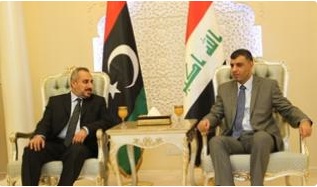
In one of the first state visits by a member of the recently sworn in Libyan cabinet, Minister of Housing and Utilities, Ali Hassan Al-Sharif, took part in a regional conference on housing and construction in Baghdad on Tuesday.
Speaking to the press, the minister and his Iraqi counterpart spoke about lessons to be learnt from Iraq’s challenges experienced over the past decade, and the importance of cooperation between Arab countries.
Meanwhile, Libya’s own issues are being discussed at a national and local level. Also on Tuesday, deputy Prime Minister Abdussalam Al-Qadi gave the General National Congress an overview of the country’s requirements and plans in the field of housing and infrastructure.
Pointing out present shortcomings, he emphasized the need to improve public services in various fields, including health, education, sanitation, communication, transportation and electricity.
Speaking to the GNC, Al-Qadi laid out his government’s priorities for the coming year. In order to improve drinking water supply, 185 ground water wells will be dug, and maintenance work will be carried out on 52 pumping stations and 53 reservoirs.
The sewage system will also be extended as part of the one-year plan, and public housing contracts that have already been signed will be concluded in the next nine months.
The government reportedly wants to move against the phenomenon of unauthorised dwellings and the occupation of public property, a symptom of Libya’s persistent housing crisis.
In order to justify such moves and tackle the problem quickly, the Ministry of Housing and Utilities plans to set up 6,500 prefabricated housing units as a temporary solution. Such measures will give the government some more time to decide on the resumption of larger-scale construction projects that have been on hold since before the Revolution.
The GNC session coincided with a sector-wide conference, titled the First National Conference on Housing in Libya, that took place in Benghazi this week bringing together public and private sector stakeholders.
Discussions at the conference focused on four points: the housing crisis, urban planning and infrastructure requirements, the legal aspect of construction, and environmental and social concerns.
The stated objective of the conference was to identify a comprehensive framework for the government’s housing policy, taking into account both present needs and sustainable development imperatives.
Among the conclusions of the conference was that Libya’s housing needs should be redefined, taking into account recent demographic changes, such as the establishment of new communities in various parts of the country. Participants also called for a greater degree of autonomy to be granted to the different regions and communities.
Developing the eastern region has been the main focus of recent discussions. In the days leading up to the GNC session, Benghazi Local Council received a number of high level visits from the capital.
On 13 December, second deputy PM Awad Al-Barasi was in the eastern city for talks with the head of the Local Council, Mahmoud Buraziza, on matters related to security, development and decentralisation.
Transport Minister Abdel-Qader Mohamed Al-Ayib also held talks with the Council regarding stalled construction projects such as the development of the city’s seaport and extension of Benina International Airport.
In parallel to this, talks have been taking place on a more technical level. Managers of the Organisation for the Development of Administrative Centres (ODAC), Libya’s public authority in that supervises large infrastructure development projects, met with Local Council members and some of the contractors in the East who have not yet been able to resume their construction work.
As part of their lobbying for a more decentralised system of government, local officials and private sector stakeholders suggested creating an autonomous branch of ODAC for the Eastern region. As a first step to reviving the construction sector, five hotels in Benghazi are to be renovated over the next few months.
Benghazi’s Local Council has already been promised a more important role in the planning and execution of infrastructure and housing projects.
At the start of the month, Ali Hassan Al-Sharif had declared during a visit to the East that “Benghazi should be given full powers regarding utilities and housing and its Local Council will be (considered) a real partner for the Ministry”.
The number of conferences and talks on these subjects shows that the government is deeply concerned by the current state of the country’s infrastructure and housing situation.
According to a statement made by Hatem Ben Fayed, chairman of the Libyan Housing Committee, earlier this year, 900,000 extra housing units need to be built. The issue is not a new one, and the newly installed cabinet will have to deal with problems it inherited from the interim government and, of course, Qaddafi’s regime.
Libya’s long-standing housing problem was exacerbated by the former regime’s large-scale urban development schemes which were often poorly adapted to actual needs and whose completion often lagged behind schedule.
Adding to the overall lack of consistency of the state-led development, the country has a legal framework that is hardly supportive of private sector initiatives and investment.
Creating better conditions for private entrepreneurs will remain a challenge in the years to come.
One of the more immediate issues is reviving the construction sector: many contracts signed previously are still under review and no overall agreement has been reached with the foreign contractors.
They are demanding that their outstanding claims and material losses be taken into consideration prior to the resumption of their work in Libya, which represents another tough challenge for Zeidan’s government. [/restrict]