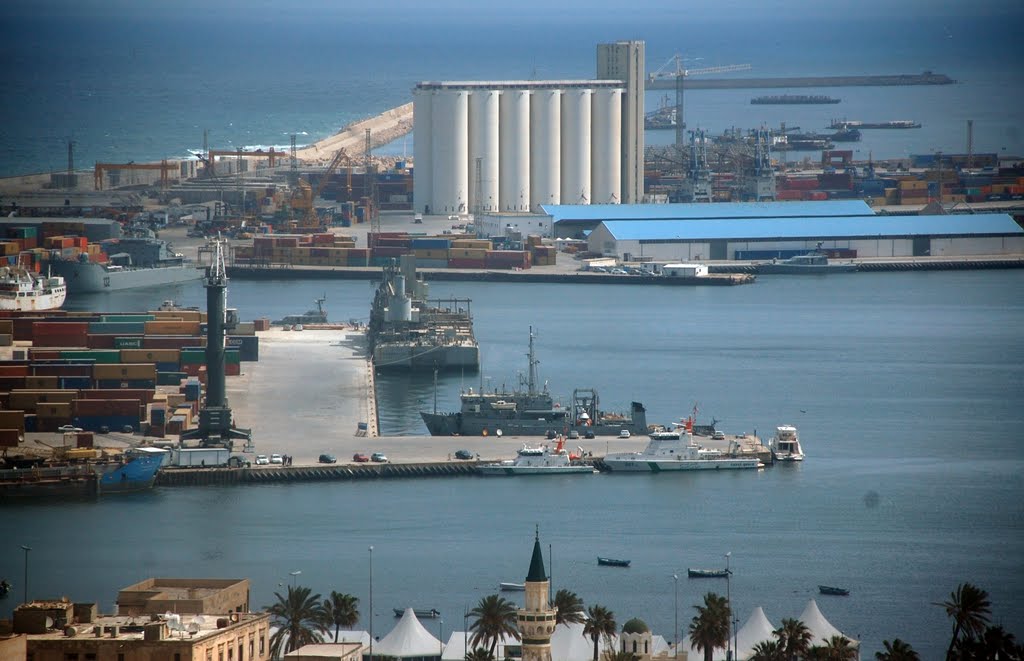
The Minister of Economy and Trade, Suhail Abu Shiha, visited Tripoli Port yesterday, with the aim of regulating the market and improving the flow of trade.
During a meeting held at the port, the minister discussed mechanisms to accelerate the release of goods and develop operational procedures at seaports. He stressed that the efficiency of work inside the ports is directly reflected in the stability of commodity prices and their availability in the local market.
Digitalisation of logistics process to reduce costs and prices of goods
The meeting also discussed the completion of linking the competent authorities to the PTS system, the launch of the electronic customs declaration system, in addition to the inclusion of shipping agencies within the digital system in its first phase, which contributes to reducing the waiting time of ships and cargoes.
Reducing shipping and container waiting times
Abu Shiha pointed out that the high costs of demurrage resulting from the delay in the entry of ships contributed to the increase in the expenses of supplying flour, feed and a number of basic commodities. He explained that some of these costs reached high percentages compared to the value of shipments.
Demurrage is a fee charged in the shipping and logistics industry when cargo or shipping containers are left at a port or terminal past the agreed-upon “free time” limit. Tripoli port is notorious for incurring higher than average demurrage. These costs are passed on to the final consumer by importers.
The minister stressed that facilitating the entry of grain and soft wheat shipments is part of the plan to address supply bottlenecks and reduce additional costs, in order to support the stability of the market and ease the burden on citizens.