No Result
View All Result
Sunday, December 7, 2025
23 °c
Tripoli
24 ° Sat
24 ° Sun
  • Advertising
  • Contact
LibyaHerald
  • Home
  • Libya
  • Business
  • Opinion
  • Magazine
  • Advertising
  • Login
  • Register
SUBSCRIBE
  • Home
  • Libya
  • Business
  • Opinion
  • Magazine
  • Advertising
  • Login
  • Register
No Result
View All Result
LibyaHerald
No Result
View All Result
Home Libya

Who pays for ISIS in Libya?

bySami Zaptia
September 6, 2016
Reading Time: 3 mins read
A A
Who pays for ISIS in Libya?

The financing model of ISIS in Libya was unsustainable says the report (Photo: HSI).

By Sami Zaptia.

The financing model of ISIS in Libya was unsustainable says the report (Photo: HSI).

London, 5 September 2016:

At the headquarters of the Royal United Services Institute (RUSI) in Whitehall, London today, Hate Speech International (HSI) launched its report: “Who pays for ISIS in Libya?”. The report is authored by James Roslington and Jason Pack.

Founded in Norway, HSI is an independent network of journalists researching extremism, hate speech and hate crimes.

Contemporary terror groups such as ISIS rely on money for their survival. This enables them to pay their soldiers and administer territory under their control as in Syria and Iraq, the HSI report says.

RELATED POSTS

Finance and Business Exhibition: Benghazi 5 to 7 January 2025

Workshop on ‘‘Regulating the Legal and Banking Framework’’ in Libya issues final recommendations

The report maintains that the key causative dynamic of the rapid defeat of ISIS in Sirte was possibly their pour financing. The ISIS financing model has always been predatory rather than productive. It has been dependent on loot, taxes, smuggling, corruption and coerced donations, the report explained.

Therefore, the report maintains, ISIS was only sustainable so long as it acquired progressively more territory to tax and plunder.

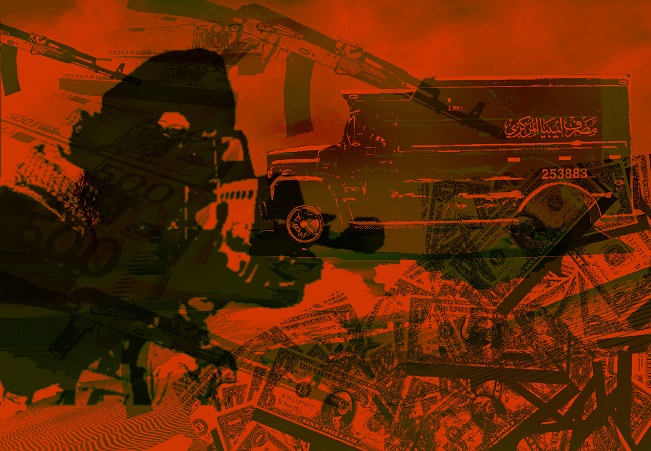
ISIS in Libya was initially set up based on seed capital from ISIS in Syria and Iraq, it explains. Additional funding was thought to have come from the hijacking of a Central Bank of Libya van in Sirte in November 2013. It was believed to have contained the equivalent of US$ 55 million.

Moreover, as many ISIS members in Libya had initially been anti-Qaddafi militias, Libyan state salaries had also acted as another source of start-up capital. The militias were also able to obtain large amounts of weapons and ammunition from the General National Congress (GNC) by benefiting from defence and interior ministry expenditures on vehicles and supplies.

After its initial rapid expansion and success in Derna and Sirte, the ISIS leadership anticipated that it would gain control of at least some of Libya’s oilfields replicating the Iraq and Syria financing model – which would have extended its existence in Libya.

However, the report explains, the financial basis of ISIS in Libya dwindled as it ran into greater resistance over 2015 and 2016, and due to mismanagement and extreme brutality. And as it’s middle eastern parent faced its own financial difficulty, it was incapable of bailing out its Libyan branch.

Unlike it’s Syrian and Iraqi parent, ISIS in Libya was unable to export oil by smuggling it by land to Turkey. The Libyan branch of ISIS was always dependent on extracting wealth and taxes from areas under its control. This wealth and tax and territory were finite in Libya curtailing the strength of ISIS, the HIS report explained.

The size and finite wealth generating capacity of Sirte and to an extent Derna, meant that the finances ISIS could raise were short-lived. ISIS’s presence in Libya acted as a disincentive to investment in the city as more and more inhabitants fled.

ISIS also failed to expand its money-raising activities into drug and, antiques, and human trafficking, despite media reports to the contrary.

The report says that by early 2016 ISIS had expanded to its natural limits. Territorially, it had reached the outskirts of Misrata in the west and territory controlled by the Libyan National Army and the Petroleum Facilities Guards in the east. Moreover, it’s brutality had turned off other potential allies.

In view of these inherent limitations, the report contends, ISIS was dependent on the vacuums and fault lines caused by Libya’s legitimacy and political splits which could allow it to expand.

The report says that if ISIS is defeated soon in Sirte, it will be more as a result of its own weakness rather than any compelling anti-ISIS battle plan by the Presidency Council/Government of National Accord affiliated Bunyan Marsous forces and its Western allies.

The report also warns that top ISIS commanders are believed to have escaped Sirte, south into the Libyan desert possibly with large amounts of cash. It is possible that they may set up along Libya’s southern arms, drugs and human trafficking routes, embedding themselves within tribal and ethnic conflicts in the southern region.

The financial realities of Libya and the absence of sovereign institutions and a coherent state security apparatus will always make Libya a fertile petri dish for jihadist organizations seeking to multiply rapidly, concluded the report.
Tags: featuredFinanceHSI Hate Speech InternationalIS/ISIS/DAESH

Related Posts

CBL Governor Issa announces three strategic initiatives to build a stronger banking sector at 6th Banking Sector Development Forum in Tunis 7 to 9 December
Business

CBL Governor Issa announces three strategic initiatives to build a stronger banking sector at 6th Banking Sector Development Forum in Tunis 7 to 9 December

December 7, 2025
CBL receives results from meetings with international banks
Business

Latest CBL stats to November 2025 show significant growth in Libya’s electronic banking sector

December 6, 2025
Nine deaths and 16 injured in Tajura state-recognised militia clashes
Libya

Overnight Zawia clashes end with civilian injuries and unconfirmed deaths

December 5, 2025
Interior Ministry’s Diplomatic Missions Protection personnel receiving training in Ukraine
Libya

Three million illegal immigrants in Libya, 75 % of whom are families, constitute ”settlement” which Libyans reject – illegally transfer US$ 7 billion annually: Interior Minister Trabelsi

December 4, 2025
EU to end Operation Sophia and to launch new Mediterranean operation to monitor UN Libya arms embargo
Libya

EU concludes Rome consultations with Libyan institutions on new migration and border management programme

December 4, 2025
Interior Ministry’s Diplomatic Missions Protection personnel receiving training in Ukraine
Libya

Libya’s National Programme for the Deportation of Illegal Immigrants: thousands repatriated with aim to repatriate 60,000 per month

December 3, 2025
Next Post
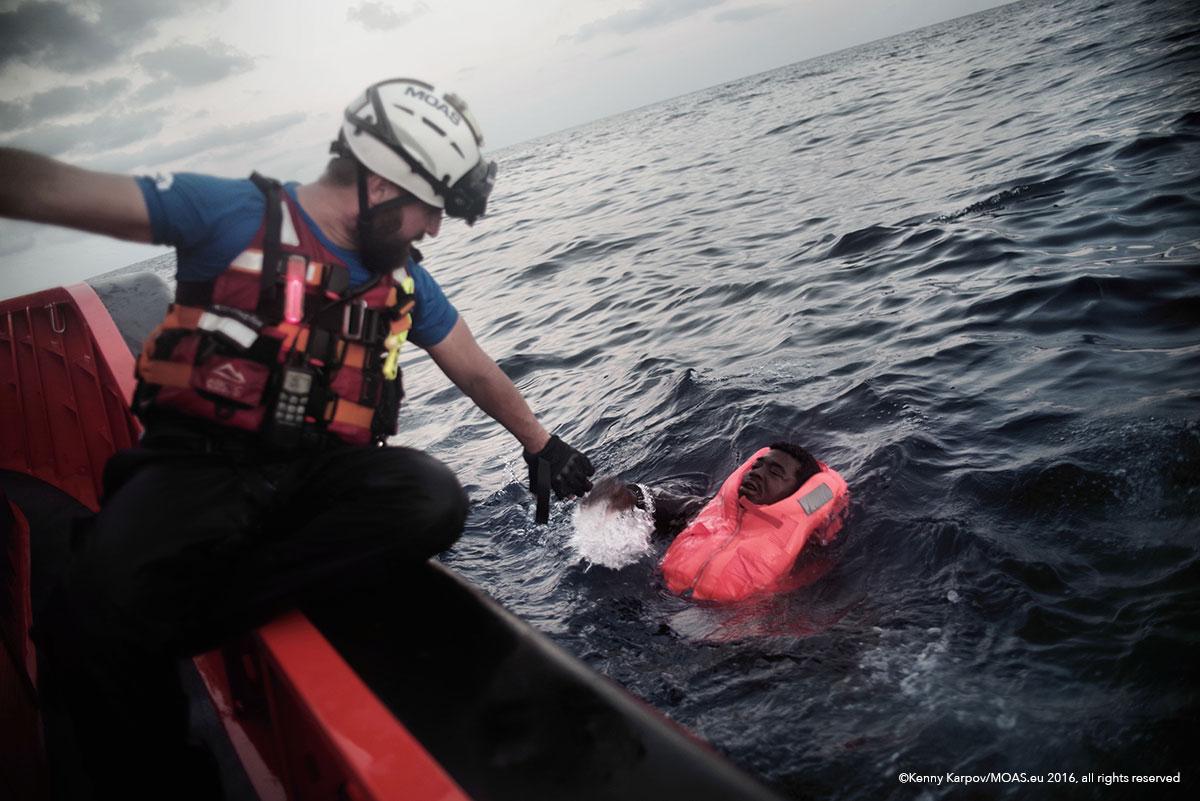
Over 2,600 Mediterranean migrants saved in 22 rescue missions yesterday: Italian Coast Guard

Over 2,600 Mediterranean migrants saved in 22 rescue missions yesterday: Italian Coast Guard

US airstrikes against ISIS in Sirte reach 108

libyaherald-Ads

Top Stories

  • Former Tripoli Marriot hotel rebranded, upgraded and reopened as Al-Hayat Tower

    Former Tripoli Marriot hotel rebranded, upgraded and reopened as Al-Hayat Tower

    0 shares
    Share 0 Tweet 0
  • AmCham Libya organizing Second AmCham Pavilion at Tripoli’s 2026 Libya Energy & Economic Summit (LEES)

    0 shares
    Share 0 Tweet 0
  • Libyan Ministry of Oil and Gas and Algeria’s Sonatrach discuss enhancing cooperation in the sector

    0 shares
    Share 0 Tweet 0
  • Three million illegal immigrants in Libya, 75 % of whom are families, constitute ”settlement” which Libyans reject – illegally transfer US$ 7 billion annually: Interior Minister Trabelsi

    0 shares
    Share 0 Tweet 0
  • National Oil Corporation, Eni, BP, and Libyan Investment Authority consortium preparing to drill first deepwater exploratory well in Sirte Basin

    0 shares
    Share 0 Tweet 0
ADVERTISEMENT
LibyaHerald

The Libya Herald first appeared on 17 February 2012 – the first anniversary of the Libyan Revolution. Since then, it has become a favourite go-to source on news about Libya, for many in Libya and around the world, regularly attracting millions of hits.

Recent News

Akakus Oil Operations complete drilling and commissioning of injection well which contributes to restarting several shut down wells

Lack of control of state spending and the de facto existence of two governments in Libya negatively affects the CBL’s effectiveness: CBL Board Member

Sitemap

  • Why subscribe?
  • Terms & Conditions
  • FAQs
  • Copyright & Intellectual Property Rights
  • Subscribe now

Newsletters

    Be the first to know latest important news & events directly to your inbox.

    Sending ...

    By signing up, I agree to our TOS and Privacy Policy.

    © 2022 LibyaHerald - Powered by Sparx Solutions.

    Welcome Back!

    Login to your account below

    Forgotten Password? Sign Up

    Create New Account!

    Fill the forms below to register

    *By registering into our website, you agree to the Terms & Conditions and Privacy Policy.
    All fields are required. Log In

    Retrieve your password

    Please enter your username or email address to reset your password.

    Log In
    No Result
    View All Result
    • Login
    • Sign Up
    • Libya
    • Business
    • Advertising
    • About us
    • BusinessEye Magazine
    • Letters
    • Features
    • Why subscribe?
    • FAQs
    • Contact

    © 2022 LibyaHerald - Powered by Sparx Solutions.

    This website uses cookies. By continuing to use this website you are giving consent to cookies being used. Visit our Privacy and Cookie Policy.