No Result
View All Result
Sunday, January 18, 2026
23 °c
Tripoli
24 ° Sat
24 ° Sun
  • Advertising
  • Contact
LibyaHerald
  • Home
  • Libya
  • Business
  • Opinion
  • Magazine
  • Advertising
  • Login
  • Register
SUBSCRIBE
  • Home
  • Libya
  • Business
  • Opinion
  • Magazine
  • Advertising
  • Login
  • Register
No Result
View All Result
LibyaHerald
No Result
View All Result
Home Business

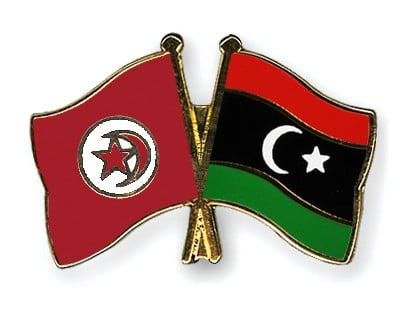
Tunisian goods entering Libya by land will no longer need to be paid for through Letters of Credit

bySami Zaptia
May 24, 2021
Reading Time: 5 mins read
A A

By Sami Zaptia.

London, 24 May 2021:

Letters of Credit (LCs) will no longer be needed for Tunisian goods entering Libya through land borders.

The news comes on the back of the visit of Tunisian Prime Minister Hichem Mechichi to Tripoli yesterday and the start of the ‘‘Libyan Tunisian Economic Forum: Towards Linking with Africa’’ which runs between 23-25 May at the Tripoli Fairgrounds.

RELATED POSTS

Customs Authority uncovers 11 companies involved in illicit use of Letters of Credit exceeding US$ 54 million

Misrata Chamber of Commerce receives Chargé d’affaires of Chinese Embassy – business visas and Letters of Credit discussed

Over 170 Tunisian entities from diverse sectors and over 1,200 Tunisian participants arrived in Tripoli Saturday for the event.

Background to the issue of LCs

It will be recalled that the Central Bank of Libya (CBL) had adjusted its regulations in February this year to allow for the opening of Letters of Credit (LC) for goods imported through land borders.

The new regulation was for the import of:

  • Raw materials for factories originating from neighbouring countries.
  • Fertilized eggs.
  • Livestock from Chad, Niger and Sudan.


Analysis: Rationale and drawbacks

It will be recalled that previously the Tripoli-based Libyan government and the Tripoli CBL had prohibited the opening of LCs for goods imported through the country’s land borders.

Moreover, on and off, it had refused to clear goods arriving at ports imported without the opening of an LC.

Importing goods into Libya through an LC means that the hard currency purchased to pay for it was conducted through a Libyan bank. The hard currency used for imports without an LC are usually paid for by hard currency purchased on the black-market or deposits abroad.

The Tripoli government has previously been forced into reversing this decision with regards to goods arriving at ports from time to time.

These reversals were to prevent the destruction of goods imported outside the official channel and were to prevent losses to traders, waste Libya’s fast dwindling hard currency resources and reduce congestion at ports.

CBL restricted list of importable goods through LCs

The problem with the official LCs is that the CBL has taken it upon itself to draw up a list of what it sees as necessary goods and products for which LCs can be opened. The CBL sees this as part of its effort to preserve Libya’s diminishing hard currency reserves in view of the country’s economic crisis.

Libya’s budget has been operating on a deficit for years made up through CBL loans. The deficit had been caused by Libya’s politically motivated oil closures and the crash in international crude oil prices.

An attempt to solve the cash crisis

The CBL had also used the implement of official LCs, by insisting a proportion of LCs is paid for in cash not by cheque or bank transfer, to force Libyan importers to get their cash hidden in their homes out into circulation. This, they hoped, would help reduce the country’s cash crisis.

As a result of the loss of confidence by the public in the Libyan authorities, Libyans have been hoarding their cash at home. This had left the banks dry.

Reduce the price of hard currency on the black-market

Nevertheless, the imposition of restrictions on what goods can be imported leaves a raft of goods that cannot be imported through LCs. This gap has been filled by the nimble private sector who buy hard currency on the black-market (or who have hard currency abroad) to meet demand for goods off the official LC list.

Inflation, prices and cost of living

Hence, allowing goods to be imported outside the LC system creates demand for hard currency on the black-market. This helps push up the price of hard currency which has a knock-on effect on inflation, prices, cost and standard of living.

Small business and grey economy

There are many small Libyan businesses operating in the grey economy who also prefer to import goods using cash. That way they avoid the taxman and the red tape and bureaucracy of opening LCs. There are also accusations of corruption by bank officials in facilitating the opening of LCs. Libyan banks are accused of preferring to open LCs to large companies.

For example, Tunisian and Egyptian SME exporters and farmers engage in instant cross-border trade, especially for seasonal fruit and vegetables. These type of farmer exporters are used to the traditional cash-based transactions, reacting to the farming season and instant demand from Libya based on phone calls as prices in Libya become favourable. Often, they drive over the border with unsold goods hoping to sell them after they enter Libya.


Tripoli Libyan government reverses decision on imports needing LCs | (libyaherald.com)

Imports at ports not paid for by LCs will no longer be released after 31 December | (libyaherald.com)

CBL allows for opening of LCs for imports through land borders | (libyaherald.com)

Tunisian Prime Minister Mechichi and high-level delegation visit Tripoli | (libyaherald.com)

Over 170 Tunisian entities and 1,200 participants arrive in Tripoli for the Libyan Tunisian Economic Forum | (libyaherald.com)

More than 150 Tunisian institutions confirmed for the 23-25 May Libyan Tunisian Economic Forum | (libyaherald.com)

The Libyan Tunisian Exhibition 23-25 May | (libyaherald.com)

Tunisia to increase fruit exports to Libya – which imports 70 percent of its production | (libyaherald.com)

Libyan-Tunisian cross land border trade back to its peak | (libyaherald.com)

Tunisian ambassador visits Misrata Chamber to strengthen economic cooperation | (libyaherald.com)

Tunisian ambassador affirms desire to operate lines to Misrata Maritime Terminal | (libyaherald.com)

Misrata Maritime Terminal preparing to launch cruise trips to Istanbul after Eid | (libyaherald.com)

Passenger and goods shipping line between Tunisian ports and Misrata are being considered | (libyaherald.com)

Libya and Tunisia reactivate Ras Ajdir unified customs window agreement to strengthen bilateral trade and flow of travellers | (libyaherald.com)

Libyan-Tunisia fund for Libyan reconstruction being considered: Libyan-Tunisian Businessmen Council | (libyaherald.com)

Tunisian President Kais Saied makes historic official visit to Libya | (libyaherald.com)

Investment, fishing, agriculture and construction identified as areas of increased Libyan-Tunisian cooperation at Sfax conference | (libyaherald.com)

Libya and Tunisia discuss cross border municipality bloc for better economic cooperation | (libyaherald.com)

Libya seeks Tunisian help in vocational training and workers in fishing, agriculture and health sectors | (libyaherald.com)

Passenger and vehicle traffic running smoothly at Libyan-Tunisian Ras Jedir land border | (libyaherald.com)

Libya-Tunisia border will not be closed under any circumstances: Tunisian PM Mechichi | (libyaherald.com)

Tunisia approves reopening of Libya land border to passengers | (libyaherald.com)

Libya-Tunisia agreement on unified health protocol to pave way for opening borders | (libyaherald.com)

Tunisia’s new ambassador to Libya hands in credentials | (libyaherald.com)


Tags: featuredLCs letters of creditTunisian prime minister Heshem Mechichi

Related Posts

LBC leading delegation to Miami for America’s Food and Beverage Show – 18 to 20 September
Business

LBC’s Libyan International Forum on Cooperative Partnerships and Funding concludes with several recommendations

January 18, 2026
Workshop on performance efficiency and quality assurance in the contracting sector
Business

General Union of Chambers of Commerce hosts multi-sector high-level French trade delegation

January 18, 2026
Economy Minister Hwej reviews his ministry’s implementation of its 2023 plan and issues several directives
Business

Economy Minister Hwej warns that Libya can run out of hard currency reserves if it does not control imports

January 18, 2026
The International Forum & Exhibition for Free Zones – Misrata: 28 to 29 June at Misrata Free Zone
Business

Qatari, Italian and Swiss US$ 2.7 billion investment in Misrata Free Zone to increase its capacity to 4 million containers annually

January 18, 2026
CBL receives results from meetings with international banks
Business

CBL devalues LD by 14.7% from approximately LD 5.43/dollar to about LD 6.36/dollar

January 18, 2026
Misrata Chamber opens registration of contracting companies to implement its projects – including foreign and JV companies
Business

Misrata Chamber of Commerce holds several meetings in Istanbul as part of marketing efforts of its Sixth Exhibition for Building and Equipping, Misrata – 2 to 5 May

January 17, 2026
Next Post

Co-Chairs of Economic Working Group in inaugural meeting with Aldabaiba government: important to maintain momentum on economic track

Parliament only partially approves 2021 budget, calls Finance Minister for questioning, creates committee to study amended budget

libyaherald-Ads

Top Stories

  • Attorney General orders arrests at Jumhouria bank branch for embezzlement

    Head of LISCO’s Materials Department detained in US$ 26 million contract fraud with Austrian company VA Intertrading

    0 shares
    Share 0 Tweet 0
  • National Development Agency Signs MoU for 1,000 Pivot Irrigation Systems for Southern Libya

    0 shares
    Share 0 Tweet 0
  • 21 MoU’s signed at yesterday’s Libyan Greek Development and Reconstruction Forum in Benghazi

    0 shares
    Share 0 Tweet 0
  • Dollar breaks LD 9 mark on black-market for first time since December 2017

    0 shares
    Share 0 Tweet 0
  • Government follows up with implementing companies and Hill International on Zumurrud Mall project

    0 shares
    Share 0 Tweet 0
ADVERTISEMENT
LibyaHerald

The Libya Herald first appeared on 17 February 2012 – the first anniversary of the Libyan Revolution. Since then, it has become a favourite go-to source on news about Libya, for many in Libya and around the world, regularly attracting millions of hits.

Recent News

LBC’s Libyan International Forum on Cooperative Partnerships and Funding concludes with several recommendations

General Union of Chambers of Commerce hosts multi-sector high-level French trade delegation

Sitemap

  • Why subscribe?
  • Terms & Conditions
  • FAQs
  • Copyright & Intellectual Property Rights
  • Subscribe now

Newsletters

    Be the first to know latest important news & events directly to your inbox.

    Sending ...

    By signing up, I agree to our TOS and Privacy Policy.

    © 2022 LibyaHerald - Powered by Sparx Solutions.

    Welcome Back!

    Login to your account below

    Forgotten Password? Sign Up

    Create New Account!

    Fill the forms below to register

    *By registering into our website, you agree to the Terms & Conditions and Privacy Policy.
    All fields are required. Log In

    Retrieve your password

    Please enter your username or email address to reset your password.

    Log In
    No Result
    View All Result
    • Login
    • Sign Up
    • Libya
    • Business
    • Advertising
    • About us
    • BusinessEye Magazine
    • Letters
    • Features
    • Why subscribe?
    • FAQs
    • Contact

    © 2022 LibyaHerald - Powered by Sparx Solutions.

    This website uses cookies. By continuing to use this website you are giving consent to cookies being used. Visit our Privacy and Cookie Policy.