No Result
View All Result
Wednesday, May 13, 2026
23 °c
Tripoli
24 ° Sat
24 ° Sun
  • Advertising
  • Contact
LibyaHerald
  • Home
  • Libya
  • Business
  • Opinion
  • Magazine
  • Advertising
  • Login
  • Register
SUBSCRIBE
  • Home
  • Libya
  • Business
  • Opinion
  • Magazine
  • Advertising
  • Login
  • Register
No Result
View All Result
LibyaHerald
No Result
View All Result
Home Libya

NOC’s Fuel Crisis Committee reports continued success in its anti-smuggling and profiteering efforts

bySami Zaptia
June 6, 2017
Reading Time: 3 mins read
A A
NOC’s Fuel Crisis Committee reports continued success in its anti-smuggling and profiteering efforts

(Photo: Fuel Crisis Committee).

By Sami Zaptia.

(Photo: Fuel Crisis Committee).
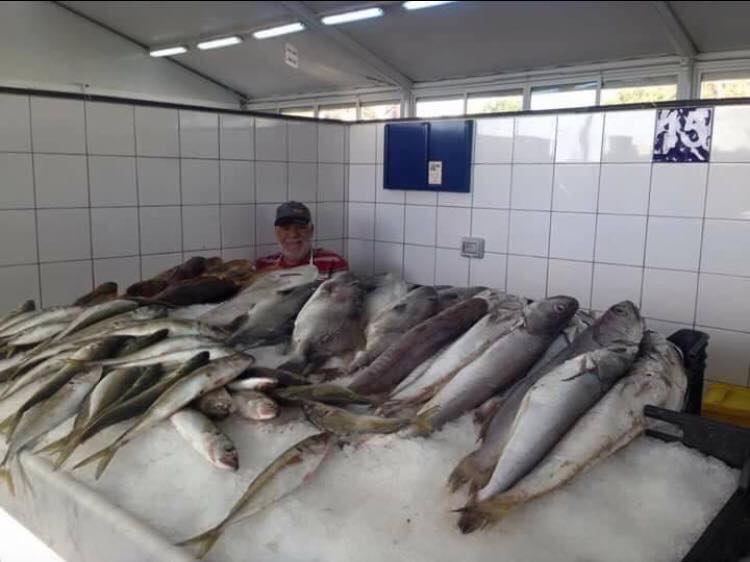
The NOC/Brega Fuel Crisis Committee has reported that due to its anti smuggling efforts fish prices are now down in Tripoli (Photo: Fuel Crisis Committee).

London, 6 June 2017:

The National Oil Corporation’s (NOC) Brega Fuel and Gas Crisis Committee reports that it has had continued success in its anti-smuggling and profiteering activities across the country in a variety of sectors.

Yesterday, it reported that fish prices in Tripoli’s central fish market have continued to fall drastically from recent unprecedented highs thanks to its military naval operation ‘‘Mediterranean Storm’’.

Mediterranean Storm was launched in April this year and was a military operation at sea targeting subsidized fuel smugglers and foreign fishermen in Libyan waters. It also targets Libyan fishing vessels smuggling their catch to foreign vessels for a higher hard currency return. Mediterranean Storm now forces Libyan fishing vessels to land their catch in Libya – as Libyan fish exports are currently banned.

RELATED POSTS

Libya’s National Oil Corporation regains full control of Ras Lanuf Refinery from Emirati LERCO JV’s Trasta Company

Mellitah Oil & Gas Bouri field US$ 1.565 billion gas exploitation project completes phase – to start utilising 125 million cf / day of natural gas by September

Prices have shot up drastically in Libya post the 2011 revolution, especially for imported goods, reflecting the shortage in hard currency at official exchange rates (LD 1.4 to the dollar) and the black market exchange rate of around LD 8/dollar. However, part of this inflation is pure profiteering by traders taking advantage of weak state monitoring and enforcement institutions.

The Fuel Crisis Committee is an odd entity. Its roots are a committee formed in conjunction with the Tripoli Central Council formed in 2011 purely to solve fuel shortages in the capital. It coordinated fuel and cooking gas deliveries, ensuring retailers retailed their allocations of subsidised fuel and gas from Brega at the official retail price rather than profiteering by selling them in bulk or at inflated black market rates.

It also ensured trucks delivering fuel to outlying petrol stations were not diverted to border smugglers or to phantom petrol stations that exist purely on paper as a cover for fuel smuggling. The committee also coordinated security and forced petrol stations to open during working hours and installed cctv cameras for security and monitoring ad provided power generators. It also introduced prepaid payment cards at petrol stations in an effort to ease the cash crisis.

With the power and administrative void in the capital, together with the rest of Libya, the committee found itself playing a larger and larger role. The committee, as it has openly admitted, has no legal standing or budget beyond its narrow remit. However, finding a need and gap to fill, and urged on by popular demand, it has given itself the mandate to expand its role and actions unhindered in Libya’s post 2011 state of weak institutions.

Emboldened by its success in fighting fuel and gas smuggling by land and sea and buoyed by huge popular support, the committee launched two further operations. On 21 May, six days before the start of the holy fasting month of Ramadan it launched operation Fazaat Wattan (loosely translated to mean proactive patriotic giving or national awakening). The operation, in cooperation with council police, was to counter the hoarding of goods, profiteering and the sale of out of date goods by traders.

It also forced traders that had imported their goods through letters of credit at the official exchange rate (around six times cheaper than the black market rate) into selling their goods at a relatively fair price – rather than six times their cost.

On 1 June the committee went further by launching operation Tafah Al Kayel (loosely translated to, enough is enough) in conjunction with the Administrative Control Authority (ACA), a state oversight authority tasked with monitoring corruption and mismanagement by state employees.

The Fuel Crisis Committee said that this operation will be a wide operation aimed at all ministries and state institutions and banks. It aims to rectify the current low foreign exchange rate of the Libyan dinar against hard currencies and solve the acute cash shortage crisis.

The committee said that it will also call officials, including ministers, for questioning. It warned them against failing to turn up or failing to provide documentation or obstructing investigations by the ACA.

As mentioned earlier, and unsurprisingly, with some fall in prices and reduction in fuel shortages, the committee has met with huge popular support. For example, on 1 June it claimed that it had reduced fuel and gas smuggling by around 90 percent, which equates to preventing the smuggling of around 20 million litres of fuel per day by land and sea.

The committee became so popular that Faiez Serraj, head of the internationally-recognized Presidency Council and Government of National Accord, met with the committee’s head this April to offer him his full support.

It will be interesting to see how far the committee can progress and expand into other sectors and if it will meet with any resistance. The success of the Fuel Crisis Committee raises the question of whether the committee can act as a model for further effectiveness by Libya’s various state entities which are struggling to achieve traction in alleviating many of Libya’s bottlenecks and problems.
Tags: ACA Administrative Control AuthorityBREGA Fuel Crisis CommitteeBrega Oil and Gas Marketing Companycouncil policefeaturedNOC National Oil Corporationprofiteeringpropane cooking gas cylinderssmuggling

Related Posts

CBL receives results from meetings with international banks
Business

CBL renews call for closure of unofficial FX sales outlets – as dinar begins to slide again

May 12, 2026
Germany’s GIZ launches Libya IT sector survey to assess employment potential, identify training gaps
Libya

GIZ organises workshop on sustainable municipal waste management systems

May 10, 2026
Attorney General orders arrests at Jumhouria bank branch for embezzlement
Libya

Tripoli Court convicts former Financial Controller at the Libyan mission in Bangladesh to fours jail for financial fraud

May 9, 2026
Petrol queues stoked by false rumours: Brega Petroleum
Libya

Zawia armed clashes ended – Zawia Refinery’s Aviation Kerosene Tank 501 ruptured

May 9, 2026
Visiting Jordanian specialists perform 18 infertility and delayed childbearing operations in Zintan Hospital
Libya

Health Ministry signs Strategic Cooperation Agreement 2026-2027 with WHO – announces results of the 100-Day Initiative

May 8, 2026
Libya

Zawia clashes lead to Zawia Refinery shutdown and evacuation of Zawia Port

May 8, 2026
Next Post
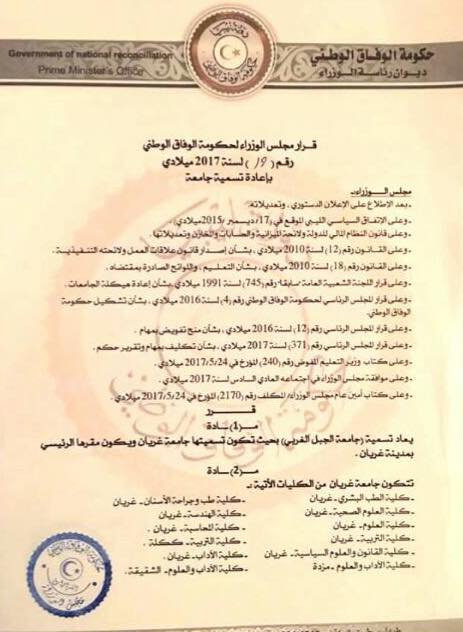
Western Mountain University split into two – Gharyan and Zintan universities; new Wirshefana university

Western Mountain University split into two - Gharyan and Zintan universities; new Wirshefana university

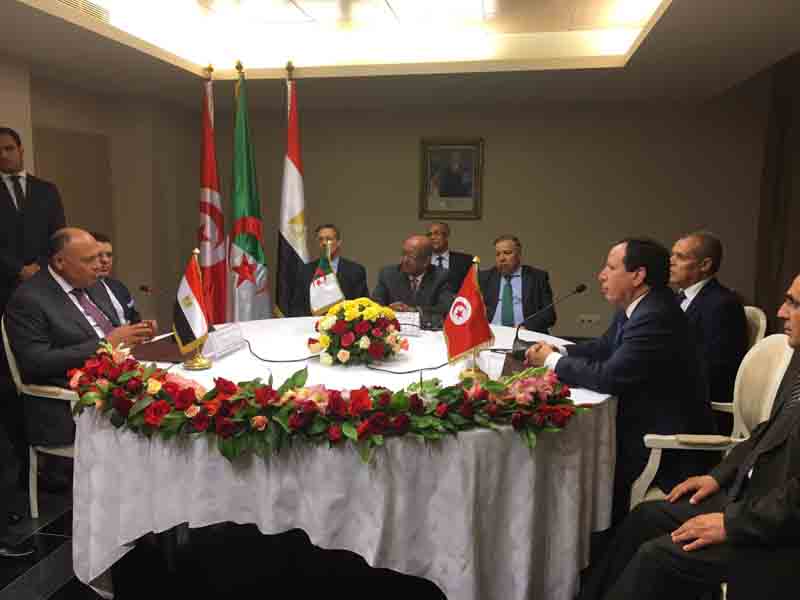
Dialogue efforts must speed up say foreign ministers of Egypt, Tunisia and Algeria

Dialogue efforts must speed up say foreign ministers of Egypt, Tunisia and Algeria

Top Stories

  • Zawia clashes lead to Zawia Refinery shutdown and evacuation of Zawia Port

    0 shares
    Share 0 Tweet 0
  • Mellitah Oil & Gas Bouri field US$ 1.565 billion gas exploitation project completes phase – to start utilising 125 million cf / day of natural gas by September

    0 shares
    Share 0 Tweet 0
  • Libya’s National Oil Corporation regains full control of Ras Lanuf Refinery from Emirati LERCO JV’s Trasta Company

    0 shares
    Share 0 Tweet 0
  • Zawia armed clashes ended – Zawia Refinery’s Aviation Kerosene Tank 501 ruptured

    0 shares
    Share 0 Tweet 0
  • Libyan Express and Italy’s 4 Airways to launch joint Libya-Europe air route ”soon”

    0 shares
    Share 0 Tweet 0
ADVERTISEMENT
LibyaHerald

The Libya Herald first appeared on 17 February 2012 – the first anniversary of the Libyan Revolution. Since then, it has become a favourite go-to source on news about Libya, for many in Libya and around the world, regularly attracting millions of hits.

Recent News

Libyan Chinese Dialogue: Libya views China as a strategic partner in the reconstruction and development phase

Libyan Export Development Authority signs MoU with Libyan Italian Chamber of Commerce to develop non-hydrocarbon exports

Sitemap

  • Why subscribe?
  • Terms & Conditions
  • FAQs
  • Copyright & Intellectual Property Rights
  • Subscribe now

Newsletters

    Be the first to know latest important news & events directly to your inbox.

    Sending ...

    By signing up, I agree to our TOS and Privacy Policy.

    © 2022 LibyaHerald - Powered by Sparx Solutions.

    Welcome Back!

    Login to your account below

    Forgotten Password? Sign Up

    Create New Account!

    Fill the forms below to register

    *By registering into our website, you agree to the Terms & Conditions and Privacy Policy.
    All fields are required. Log In

    Retrieve your password

    Please enter your username or email address to reset your password.

    Log In
    No Result
    View All Result
    • Login
    • Sign Up
    • Libya
    • Business
    • Advertising
    • About us
    • BusinessEye Magazine
    • Letters
    • Features
    • Why subscribe?
    • FAQs
    • Contact

    © 2022 LibyaHerald - Powered by Sparx Solutions.

    This website uses cookies. By continuing to use this website you are giving consent to cookies being used. Visit our Privacy and Cookie Policy.