No Result
View All Result
Saturday, December 27, 2025
23 °c
Tripoli
24 ° Sat
24 ° Sun
  • Advertising
  • Contact
LibyaHerald
  • Home
  • Libya
  • Business
  • Opinion
  • Magazine
  • Advertising
  • Login
  • Register
SUBSCRIBE
  • Home
  • Libya
  • Business
  • Opinion
  • Magazine
  • Advertising
  • Login
  • Register
No Result
View All Result
LibyaHerald
No Result
View All Result
Home Libya

Haithem Tajouri named in UN report for financial fraud and human rights infringements

bySami Zaptia
March 17, 2016
Reading Time: 4 mins read
A A

By Sami Zaptia.

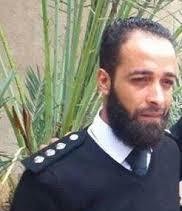
Head of the Tripoli Revolutionaries Brigade militias, Haitham Tajouri, is named in a UN report for financial corruption and human . . .[restrict]rights infringements (Photo: Archives).
Head of the Tripoli Revolutionaries Brigade militias, Haitham Tajouri, is named in a UN report for financial corruption and human rights infringements (Photo: Archives).

London, 17 March 2016:

A UN report has named prominent Tripoli militia leader Haithem Tajouri of financial fraud and human rights infringements. Tajouri, who is often in the headlines, heads the Tripoli Revolutionaries’ Brigade.

The claim came in the 215-page final report of the UN Panel of Experts on Libya to the President of the Security Council released early this week.

Tajouri (and his associates) is named for having, directly or indirectly, opened, or benefitted from the opening of Letters of Credit (LCs), using fake companies and through the use of coercion.

RELATED POSTS

CBL authorises activation of money transfers through the stalled MoneyGram and Western Union systems

Parliament approves Libya’s LD 303 billion Treasury debts – Central Bank to settle the debts by deducting 3% of the Treasury’s total revenues

He and his associates are also accused in the UN report of making threats to Central Bank of Libya (CBL) and other bank employees in order to open LCs at the official exchange rate.

The report said; ‘’Lists of letter of credits that have benefited to Haytham Al-Tajuri and his business associates. The list also includes the list of fake companies and the amount for which they applied. The document also mentions threats that were made by Mr. Tajuri and his associates to the CB (Central Bank) and commercial banks employees. In addition to Haytham Al-Tajuri, the table contains the names of his associates’’.

On human rights abuses the UN report says ‘’Haytham al-Tajuri created a private detention centre in Tajura’s, Mazara‘at al-Na‘am, (Ostrich Farm) where he detained former regime officials and sympathizers. He extorted large sums of money from visitors. During Operation Fajr operations in July 2014, 12 former regime officials disappeared from his facility. His claim that he had handed them over to their families was denied to government sources. His camp was bombed by the air force in April 2015’’.

Tajouri has not kept a low profile in Tripoli. In January, Tajouri and his brigades were among those militias that paraded through Tripoli threatening to fire upon any foreign troops that may enter Tripoli in support of the Government of National Accord (GNA) of Faiez Serraj. He announced that the GNA was a government of foreign occupation.

This was a complete reversal of an earlier announcement made in December supporting ”any GNA”.

In December 2015 his Brigade was reported to have been part of the militia infighting that broke out in Tripoli. In November 2015 even the illegitimate GNC had condemned Tajouri for his attack on the Prime Ministry. Tajouri’s brigades were also liked to the kidnap of a minister of the Tripoli administration in November 2015.

It will be recalled that Libya is currently going through an acute economic and financial crisis, caused, on the one hand by a fall in its oil production/exports and a fall in international crude oil prices.

The economic crises is also caused by the insecurity in the country leading to lack of political order, legitimacy and political and military divisions.

Having access to LCs in Libya means buying foreign currency, mostly US dollars, at the official exchange rate of around 1 US$ to LD 1.30 as opposed to 1 US $ to 3.47 – as quoted to Libya Herald today by one Tripoli black market Foreign exchange dealer.

The difference of about 266 per cent at today’s rate is the driver behind Libya’s current FX corruption which its militias are participating in. Those who successfully obtain hard currency at the official exchange rate simply sell the foreign cash at the black market. Hard currency cash supplies are usually in relatively small amounts and are hard to obtain.

LCs, on the other hand, can be opened in the tens of millions, if not more. If a bank insider is complicit, larger LCs can be opened which means more payoffs can be spread around. If a corrupt LC for the purpose of money laundering is successfully opened, the benefactors have the option of either importing inferior or cheaper goods at a token percentage of the total of the LC into Libya, compared to what is listed on the Pro Forma/Invoice, or simply sending empty containers

The current legitimacy and power vacuum in Libya generally, but particularly in the capital Tripoli, means that there is no transparency or accountability in the institutions of the post 2011 revolutionary Libyan state.

Institutions are still weak with little enforcement power and constantly subject to coercion by the armed public and militias. Institutions such as the judiciary, the Criminal Investigations Department of the police, the Attorney General/Public Prosecutors’ Office (PPO), the Audit Bureau, the Central Bank of Libya (CBL) and the Administrative Control Authority, are all unable to act independently.

This is compounded by the fact that the elected parliament, the House of Representatives, and its government were all forced to flee the capital Tripoli when it was invaded by pro GNC militias in the summer of 2014.

As the economic situation in Libya has deteriorated, the CBL, Audit Bureau and PPO have been coming under intense public pressure to take action as Libyans found their purchasing power diminishing as a result of rising consumer prices and FX rates, and found themselves unable to withdraw ant cash at their banks due to a cash shortage. [/restrict]

Tags: AB Audit BureauACA Administrative Control AuthorityCBL Central Bank of Libyafeaturedfinancial fraudFX foreign currency exchangeHoR House of Representativeshuman rightsLCs letters of creditlegitimacymilitiasUN

Related Posts

GNU to take oath at Benghazi HoR session and budget to be approved at Tripoli session: GNU
Libya

Western Libya’s Chief of General Staff of the Libyan Army and his accompanying delegation die in plane crash over Ankara

December 24, 2025
Libyan Egyptian Joint Economic Chamber discusses organizing return of Egyptian workers to Libya
Business

‘‘Benghazi Real Estate Horizon 2025’’ exhibition held in Benghazi from December 20-22

December 24, 2025
HoR condemns Serraj’s foreign intervention call
Libya

Parliament approves Libya’s LD 303 billion Treasury debts – Central Bank to settle the debts by deducting 3% of the Treasury’s total revenues

December 23, 2025
Policeman killed in UNDP Tripoli office attack
Libya

US$ 5.8 million UNDP initiative approved to help Libya reverse land degradation, protect biodiversity, and strengthen climate resilience

December 22, 2025
Attorney General orders arrests at Jumhouria bank branch for embezzlement
Libya

Former National Commercial Bank managers convicted for LD 4.3 million embezzlement

December 22, 2025
Electronic Tracking system for imported goods goes into operation
Libya

Customs Authority thwarts attempt to smuggle over €123,000 through Mitiga Airport

December 21, 2025
Next Post

GNA to move to Tripoli "within a few days" says Serraj

Mass Zliten jail-break after suspected IS attack

libyaherald-Ads

Top Stories

  • GNU to take oath at Benghazi HoR session and budget to be approved at Tripoli session: GNU

    Western Libya’s Chief of General Staff of the Libyan Army and his accompanying delegation die in plane crash over Ankara

    0 shares
    Share 0 Tweet 0
  • HoR’s 303 billion debt cancellation is necessary as the debt’s negative effects have already occurred: Husni Bey

    0 shares
    Share 0 Tweet 0
  • The much-delayed refurbishment of Tripoli’s historic Grand Hotel commenced by ODAC

    0 shares
    Share 0 Tweet 0
  • CBL authorises activation of money transfers through the stalled MoneyGram and Western Union systems

    0 shares
    Share 0 Tweet 0
  • High-level national workshop held to review Libya’s draft Renewable Energy Law

    0 shares
    Share 0 Tweet 0
ADVERTISEMENT
LibyaHerald

The Libya Herald first appeared on 17 February 2012 – the first anniversary of the Libyan Revolution. Since then, it has become a favourite go-to source on news about Libya, for many in Libya and around the world, regularly attracting millions of hits.

Recent News

NESDB symposium aimed at mitigating the negative effects on Libyan state and society of the phenomenon of illegal migration and settlement

CBL authorises activation of money transfers through the stalled MoneyGram and Western Union systems

Sitemap

  • Why subscribe?
  • Terms & Conditions
  • FAQs
  • Copyright & Intellectual Property Rights
  • Subscribe now

Newsletters

    Be the first to know latest important news & events directly to your inbox.

    Sending ...

    By signing up, I agree to our TOS and Privacy Policy.

    © 2022 LibyaHerald - Powered by Sparx Solutions.

    Welcome Back!

    Login to your account below

    Forgotten Password? Sign Up

    Create New Account!

    Fill the forms below to register

    *By registering into our website, you agree to the Terms & Conditions and Privacy Policy.
    All fields are required. Log In

    Retrieve your password

    Please enter your username or email address to reset your password.

    Log In
    No Result
    View All Result
    • Login
    • Sign Up
    • Libya
    • Business
    • Advertising
    • About us
    • BusinessEye Magazine
    • Letters
    • Features
    • Why subscribe?
    • FAQs
    • Contact

    © 2022 LibyaHerald - Powered by Sparx Solutions.

    This website uses cookies. By continuing to use this website you are giving consent to cookies being used. Visit our Privacy and Cookie Policy.