Tripoli based Libyan Prime Minister, Abd Alhamid Aldabaiba, proposed three alternative methods to reforming the country’s current unsustainable fuel subsidies. The proposals came during his opening speech at the first session of the Libyan Economic Forum, held last Tuesday (22 April) at the Tripoli headquarters of the National Economic and Social Development Board (NESDB).
Aldabaiba proposed the first option of granting direct cash payments in lieu of subsidies directly to citizens’ bank accounts. The amounts would be calculated based on an estimate of how much fuel the average Libyan citizen consumes.
The second option would be to increase citizens’ salaries by the estimated average amount of fuel consumed.
The third option would be to allocate a quota for each citizen of subsidized fuel to be disbursed using preloaded cards. Any extra quantity of fuel purchased by a citizen beyond that would be purchased at the non-subsidised full international price.
The fuel subsidy reforms would reduce wasteful fuel consumption, the industrial scale fuel smuggling to neighbouring countries, reduce corruption of kickbacks to state-sector personnel perceived to occur during the purchasing process of imports, and save on Libya’s hard currency used to import subsidised fuel.
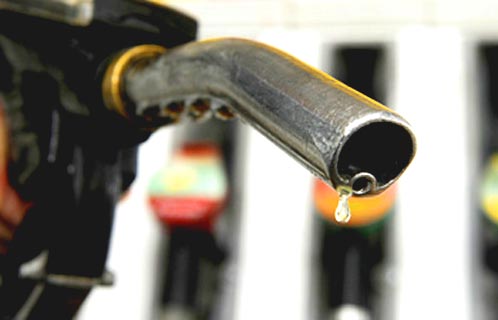
Libya does not refine enough fuel locally to meet its consumption and relies on imported fuel paid for using hard currency and sold at a fraction of its purchase price. At the time of writing a litre of petrol is retailed to consumers for LD 0.15 – about US$ 0.02/litre. Meanwhile, it retails at between 10 to 20 times that in neighbouring countries. This price differential has made fuel smuggling out of Libya logically inevitable as it offers easy money for many. The price differential has also made it beyond any government’s counter-fuel smuggling efforts.
Aldabaiba went on to say that fuel smugglers launched a systematic campaign against him when he previously raised the fuel subsidy reform file. He called on state institutions to explain to the Libyan public ways to avoid wasting hundreds of billions in fuel subsidies.
He said he was not afraid of this campaign against him, adding that this is Libyan money which must be used in a real and serious way for the Libyan people. He said there is smuggling of gasoline and oil, and electricity is disbursed without account and that the (previously mentioned) solutions are very clear.
He said the government was unable to prevent fuel smuggling to neighbouring countries – and even Europe through some ports. He said Libya has the cheapest fuel in the world, but the government was unable to keep up with this cheap price of fuel.
Comment: The ever-present debate of Libya’s fuel subsidy reform
It will be recalled that successive Libyan governments have often talked about subsidy reform, but none have had the courage to implement them. This includes one of Qaddafi’s prime ministers who announced a small increase in petrol prices only to reverse it swiftly. And to put things into a historical perspective, the three fuel subsidy reforms proposed by Aldabaiba are not new. They have been discussed ad nauseum for decades rather than years.
Governments feel they lack a mandate
Over the decades, food, fuel and electricity subsidies have become a cultural right. Successive Libyan governments, including during the Qaddafi era, have feared civil disobedience as a result of introducing fuel reforms.
Subsidies instead of votes!
With the Qaddafi regime, subsidies were a form of repression. They were the political quid pro quo. Libyans received subsidised food, fuel and electricity instead of freedoms and democracy. Post Qaddafi, the weak unmandated governments have not felt strong enough to reform fuel subsidies.
The Libyan public, for their part, feel that governments have been inefficient, failing to deliver development in governance, finance, health, education, training, infrastructure, housing, security etc. They do not feel they get a return on their oil money and their only luxury is subsidies. Libyan politicians implicitly accept this and hence they have been reluctant to impose subsidy reforms.
Food and other subsidies were removed.
However, to put this into perspective, it must be recalled that food and other subsidies were removed towards the end of the Qaddafi regime (1969 to 2011). At their peak, subsidies used to be applied to several key foods, including pasta, rice, cooking oil, tomato paste, tea, sugar, flour etc. Libyans had a set monthly quota (based on family size) of the mentioned items which they could buy using their cooperative book at their consumer cooperative.
Besides these monthly food supplies, the cooperative would also distribute, from time-to-time, subsidised TVs, fridges, cigarettes, shampoo, washing powder etc.
Subsidised goods encouraged corruption
The problem was that the government ended up importing multiple quantities of subsidised goods of what Libya needed. Much of these subsidised items were subsequently be found on sale in local shops at full prices or smuggled to neighbouring countries.
Subsidies are unsustainable
As Aldabaiba has alluded to, the reality is that Libya’s current subsidies are unsustainable. They are a drain on finite hard currency and resources in general – resources that are desperately needed for developing infrastructure, health, education, human resource development etc.
The introduction of prepaid electricity and metres
It must also be recalled that the current Aldabaiba government has partially introduced, and quite successfully too, prepaid electricity and water metres. Yes, this has been in the wealthier urban centres so far, but it is a start – a start of the culture of paying. This reintroduces the concept that people should pay for the electricity and water they consume – even if it is still at subsidised prices.
The public does not trust the authorities to deliver subsidy replacement payments
And while a section of the Libyan public understands that the current subsidies are wasteful and unsustainable, they do not trust the authorities to deliver the subsidy replacement payments. The regular cash shortages at banks underscores this fear. They feel that out of all of Libyan’s billions of oil money and the corruption of it – fuel subsidies are the only thing they are guaranteed to receive directly.