No Result
View All Result
Sunday, April 5, 2026
23 °c
Tripoli
24 ° Sat
24 ° Sun
  • Advertising
  • Contact
LibyaHerald
  • Home
  • Libya
  • Business
  • Opinion
  • Magazine
  • Advertising
  • Login
  • Register
SUBSCRIBE
  • Home
  • Libya
  • Business
  • Opinion
  • Magazine
  • Advertising
  • Login
  • Register
No Result
View All Result
LibyaHerald
No Result
View All Result
Home Business

Imports at ports not paid for by LCs will no longer be released after 31 December

bySami Zaptia
November 18, 2020
Reading Time: 3 mins read
A A

By Sami Zaptia.

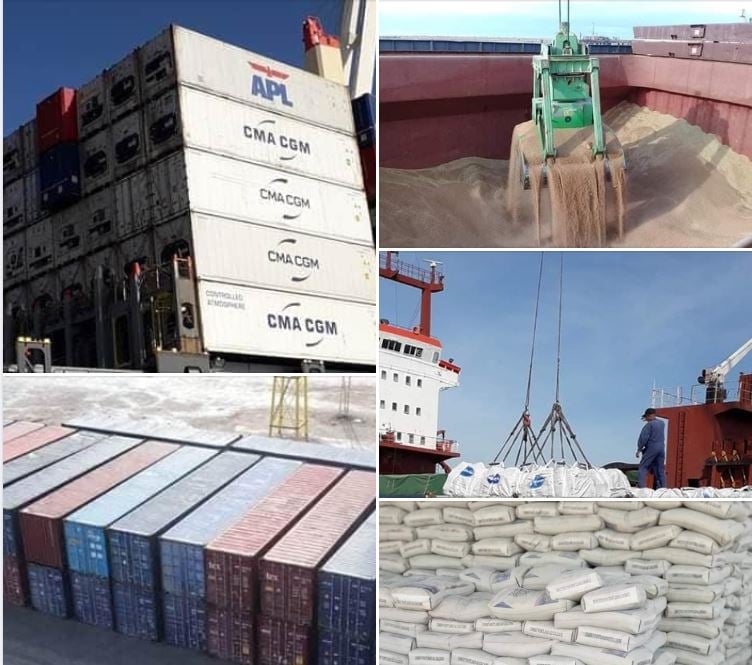
Goods not paid for using LCs will no longer be cleared at western Libyan ports after 31 December (Photo: Benghazi Port).

London, 18 November 2020:

Libya’s Customs Authority announced on Monday (16/11) that it will no longer release imported goods after the end of this year.

The authority said that by December 31 importers will no longer be able to clear their goods at seaports and land ports and any shipments that arrive after that date will be confiscated.

The procedure comes in implementation of the decision of the Faiez Serraj Libyan government based in Tripoli which had allowed traders to import goods without documentary credit (Letters of Credit-LCs) proving their access to official foreign currency from the Tripoli Central Bank of Tripoli (CBL).

RELATED POSTS

Tripoli Chamber of Commerce to hold seminar with Embassy of China on 12 April on strengthening bilateral trade

National Housing and Real Estate Development Programme opens registration for construction companies to implement new and stalled projects

It will be recalled that the Tripoli-based Libyan government decree of August 2020 (560/2020) had stipulated that the period during which merchants can import goods without LCs will end on 31 December 2020.

It is unclear if the eastern Libyan government will implement this western Libyan government decree. If it is not implemented in the east, it may divert some imports to eastern ports to be transported by road to western Libya.

Analysis: Rationale and drawbacks

It will be recalled that the Tripoli-based Libyan government had passed the above decree to grant a waiver to merchants who had imported goods without having opening an official LC, that is without having purchased hard currency and paid for it through a Libyan bank.

The Tripoli government was forced into this decision, against the wishes of the Tripoli CBL, due to several factors.

These included the fact that Libya had just come out of the war on Tripoli with Khalifa Hafter. It was also thought that to destroy goods imported outside the official channel would obviously be a loss to importers, but also a waste of Libya’s fast dwindling hard currency resources.

These goods, which had remained in limbo stuck at ports for months, were also clogging storage space at Libya’s ports.

CBL restricted list of importable goods through LCs

The problem with the official LCs is that the CBL has taken it upon itself to draw up a list of what it sees as necessary goods and products for which LCs can be opened. The CBL sees this as part of its effort to preserve Libya’s diminishing hard currency reserves in view of the country’s economic crisis.

Libya’s budget has been operating on a budget for years made up through CBL loans. The deficit has been caused by Libya’s politically motivated oil closures and the crash in international crude oil prices.

An attempt to solve the cash crisis

The CBL also uses the implement of official LCs, by insisting a proportion of LCs is paid for in cash not by cheque or bank transfer, to force Libyan importers to get their cash hidden in their homes out into circulation. This they hope will help reduce the country’s cash crisis. As a result of the loss of confidence by the public in the Libyan authorities, Libyans have been hoarding their cash at home. This has left the banks dry.

Reduce the price of hard currency on the black-market

Nevertheless, the imposition of restrictions on what goods can be imported leaves a raft of goods that cannot be imported through LCs. This gap has been filled by the nimble private sector who buy hard currency on the black-market (or who have hard currency abroad) to meet demand for goods off the LC list.

Inflation, prices and cost of living

Hence allowing goods to be imported outside the LC system creates demand for hard currency on the black-market. This helps push up the price of hard currency which has a knock-on effect on inflation, prices, cost and standard of living.

Small business and grey economy

There are many small businesses operating in the grey economy who also prefer to import goods using cash. That way they avoid the taxman and the red tape and bureaucracy of opening LCs. There are also accusations of corruption by bank officials in facilitating the opening of LCs.

It is unclear if the Tripoli government will be able or willing to implement this new procedure to the letter. For example, Tunisian and Egyptian SME exporters and farmers engage in instant cross-border trade, especially for seasonal fruit and vegetables. These type of farmer exporters are used to the traditional cash-based transactions, reacting to the farming season and instant demand from Libya based on phone calls as prices in Libya become favourable.

Related Posts

National Housing and Real Estate Development Programme opens registration for construction companies to implement new and stalled projects
Business

National Housing and Real Estate Development Programme opens registration for construction companies to implement new and stalled projects

April 5, 2026
New Minister of Economy and Trade Suhail Abu Shiha finally assumes his duties following completion of official handover
Business

New Minister of Economy and Trade Suhail Abu Shiha finally assumes his duties following completion of official handover

April 5, 2026
Tunisia’s New African Transit Corridor via Ras Jedir: An Opportunity for Libya to Become a Trade Gateway to sub-Saharan Africa
Business

Tunisia’s New African Transit Corridor via Ras Jedir: An Opportunity for Libya to Become a Trade Gateway to sub-Saharan Africa

April 5, 2026
CBL receives results from meetings with international banks
Business

Libyan dinar will be down to LD 7.90 before mid-April: CBL briefing

April 5, 2026
Libya’s proposed Science and Technology City can reduce oil dependence, create jobs for youth and support local innovation
Business

Libya’s proposed Science and Technology City can reduce oil dependence, create jobs for youth and support local innovation

April 4, 2026
NESDB discusses food security and social protection with World Food Programme
Business

Libya must adopt proactive economic policies to counter the repercussions of regional tensions: Al-Futaisi to Libya Herald

April 4, 2026
Next Post

Jowfe to offer Halliburton services to Libyan operators

Zallaf and NOC discuss new South Refinery

Top Stories

  • Libya Development and Reconstruction Fund signs contract with Turkey’s Ankamenia for maintenance of Benghazi University’s medical colleges

    Belgasem Hafter reneges on US-brokered agreement by refusing to cut development spending – sends dinar crashing

    0 shares
    Share 0 Tweet 0
  • Aldabaiba instructs CBL to terminate Arkenu Oil Company’s oil sales agreement

    0 shares
    Share 0 Tweet 0
  • Ministry of Oil & Gas holds meeting on Nigeria-Niger-Libya Gas Pipeline Project

    0 shares
    Share 0 Tweet 0
  • Libya to host for first time part of Flintlock 2026 multinational military exercises in mid-April

    0 shares
    Share 0 Tweet 0
  • Libya Food expo opens with nearly 100 international companies from 14 different countries – led by Turkey, Egypt and Tunisia

    0 shares
    Share 0 Tweet 0
ADVERTISEMENT
LibyaHerald

The Libya Herald first appeared on 17 February 2012 – the first anniversary of the Libyan Revolution. Since then, it has become a favourite go-to source on news about Libya, for many in Libya and around the world, regularly attracting millions of hits.

Recent News

Tripoli Chamber of Commerce to hold seminar with Embassy of China on 12 April on strengthening bilateral trade

National Housing and Real Estate Development Programme opens registration for construction companies to implement new and stalled projects

Sitemap

  • Why subscribe?
  • Terms & Conditions
  • FAQs
  • Copyright & Intellectual Property Rights
  • Subscribe now

Newsletters

    Be the first to know latest important news & events directly to your inbox.

    Sending ...

    By signing up, I agree to our TOS and Privacy Policy.

    © 2022 LibyaHerald - Powered by Sparx Solutions.

    Welcome Back!

    Login to your account below

    Forgotten Password? Sign Up

    Create New Account!

    Fill the forms below to register

    *By registering into our website, you agree to the Terms & Conditions and Privacy Policy.
    All fields are required. Log In

    Retrieve your password

    Please enter your username or email address to reset your password.

    Log In
    No Result
    View All Result
    • Login
    • Sign Up
    • Libya
    • Business
    • Advertising
    • About us
    • BusinessEye Magazine
    • Letters
    • Features
    • Why subscribe?
    • FAQs
    • Contact

    © 2022 LibyaHerald - Powered by Sparx Solutions.

    This website uses cookies. By continuing to use this website you are giving consent to cookies being used. Visit our Privacy and Cookie Policy.