No Result
View All Result
Saturday, December 13, 2025
23 °c
Tripoli
24 ° Sat
24 ° Sun
  • Advertising
  • Contact
LibyaHerald
  • Home
  • Libya
  • Business
  • Opinion
  • Magazine
  • Advertising
  • Login
  • Register
SUBSCRIBE
  • Home
  • Libya
  • Business
  • Opinion
  • Magazine
  • Advertising
  • Login
  • Register
No Result
View All Result
LibyaHerald
No Result
View All Result
Home Libya

The sun will not shine automatically on Libya’s renewable plans

byNigel Ash
April 18, 2013
Reading Time: 3 mins read
A A
The sun will not shine automatically on Libya’s renewable plans

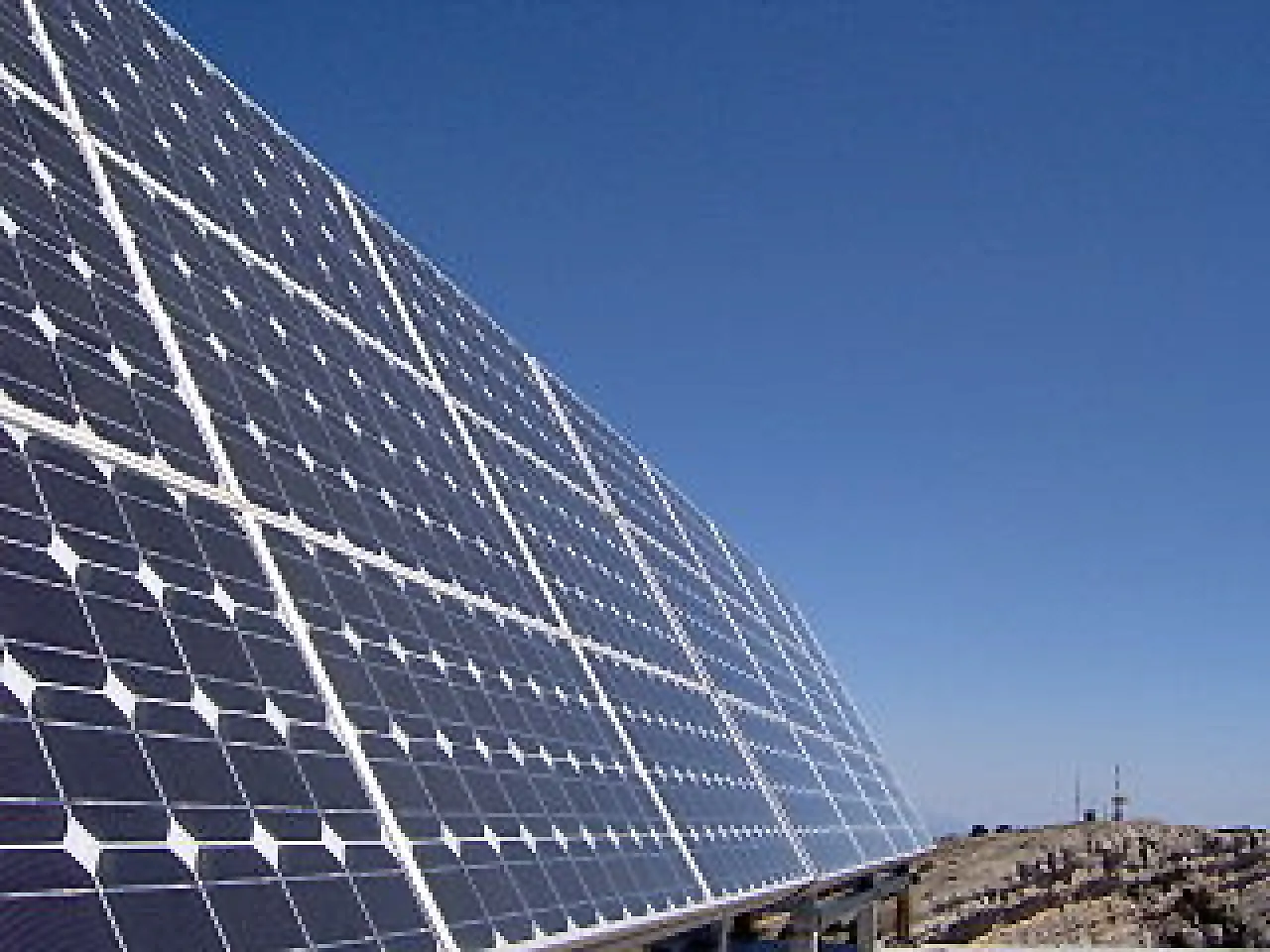
Solar Panels in EU (Photo: F. Tomas)

By John Hamilton.

Solar Panels in EU (Photo: F. Thomas)

London, 17 April 2013:

The recent renewable energies’ workshop held by UK Trade & Industry in Tripoli was an opportunity . . .[restrict]to understand Libya’s plans for increasing the quantity of electricity generated using new technologies by 2020.  The workshop explored the areas where the UK government and British businesses could contribute to helping Libya increase the share of power from renewables to 6% by 2015 and 20% by 2020.  It also involved a discussion on the introduction of anaerobic digestion technology.

While eager to advance specific projects in the short term – tenders for two solar projects are expected shortly – Libya’s chief challenge in getting renewable projects off the ground lies in mustering the political will to overcome its historic reliance on hydrocarbons and to establish  workable laws and regulations.  Speaking at the workshop, Renewable Energy Authority of Libya (Reaol) chairman Khairy Qassim Agha said that Libya had to “be in line with our neighbours and to work with the European Union.  We have a very big vision.  Libya is now a major oil exporter and we want to be a clean energy exporter 20 years from now.”

General National Congress energy committee member Abdelkarim  Al-Jiash said the committee was “ready to support such activities by issuing the required laws and regulations”.  However, the Libyan experts and engineers responsible for getting renewables projects off the ground face a host of bureaucratic, financial and also cultural hurdles.  According to one specialist from Gecol, “there is a gap between the technical people and the decision-makers.  We need an effort to let people know what is expected of renewable energy, and why we should spend all this money on it.”

RELATED POSTS

NOC holds meeting with EU delegation to review established partnerships with EU oil and gas companies and discuss emissions and renewables

LBBC’s ‘‘Libya Energy Transition Conference: Renewable Investment Opportunities’’ to take place in London on 26 November 

With many other challenges in front of it, it may take some time for the GNC to put in place the necessary legislation.   The Ministry of Electricity is currently drafting a new electricity law and renewable energy legislation is also under consideration.  Additionally Reaol is drafting a national energy efficiency action plan which will be opened for public discussion in the coming months.

UKTI expert Aidan Kinsella, who is a director of anaerobic digestion specialists Greeneos led a discussion of how this technology could be implemented.  While capable of resolving the country’s sewage and waste problem while also generating clean electricity, the logistical difficulties are immense – both the need to fix the sewage system itself, and the requirement to separate organic matter out of regular household waste.

The right laws are necessary to make it possible for privately-financed power projects – whether conventional or renewable – to supply electricity into the grid and to get paid for it.  Reform of subsidies is also necessary before this can happen.  This is also being discussed.

As one contributor to the workshop pointed out there is a proposal to start phasing out subsidies from August 2014.  With heavily-subsidised power currently being sold to end users at the equivalent of one Euro cent/kWh, there is almost no incentive for consumers to adopt distributed technologies such as domestic photovoltaic or solar heating and cooling.  Meanwhile, the government’s historic treatment of hydrocarbons as an almost free resource means it is reluctant to take on the high up-front capital costs of most renewables projects.  Even basic energy efficiency savings are currently hard to achieve.

According to a recent assessment by GECOL, if every household in Libya was given the money to pay a fully commercial electricity bill, the government would have to pay about LD 4000 per year to every family of five.  Shifting to such a system of allowing a market price for power would inevitably encourage individuals to reduce consumption or to consider more effective methods such as roof-based photovoltaic or solar heating and cooling systems.

Libya’s current renewable energy capacity is limited to a programme of relatively small photovoltaic projects totalling 4MW out of a total installed capacity for all types of generation of about 6,600MW.  Reaol is also installing solar cooling plants on all government buildings which will substantially reduce the cost of air-conditioning during summer months.  This latter project is the only one to have been signed off since the end of the Qaddafi regime.  It was approved rapidly by the interim government of Dr Abder Rahman El-Kib.  The next major renewable project to be built is the 60MW Derna wind farm.  Three other wind farms are planned; a 120-MW plant at Al-Muqrun and 50MW plants at Emsalata and Tarhouna.  Reaol has carried out feasibility studies for a 100MW concentrated solar power plant at Sebha, a 50MW CSP plant in Ghadames, and a 15MW photovoltaic plant in Shahat.

 John Hamilton is a contributing editor at African Energy (www.africa-energy.com, and a director of Cross-border Information www.crossborderinformation.com).  He was also chairman of UKTI’s renewables workshop.

[/restrict]

Tags: GECOLLibyarenewable energy

Related Posts

ACA reveals 94,000 cases of state sector salary duplication in 2015
Libya

“Building Libyan National Capacities in the Fields of Combating Corruption and Money Laundering 2025–2027” agreement signed between ACA and UNSMIL at Anti-Corruption event

December 10, 2025
CBL Governor Issa announces three strategic initiatives to build a stronger banking sector at 6th Banking Sector Development Forum in Tunis 7 to 9 December
Business

CBL Governor Issa announces three strategic initiatives to build a stronger banking sector at 6th Banking Sector Development Forum in Tunis 7 to 9 December

December 7, 2025
CBL receives results from meetings with international banks
Business

Latest CBL stats to November 2025 show significant growth in Libya’s electronic banking sector

December 6, 2025
Nine deaths and 16 injured in Tajura state-recognised militia clashes
Libya

Overnight Zawia clashes end with civilian injuries and unconfirmed deaths

December 5, 2025
Interior Ministry’s Diplomatic Missions Protection personnel receiving training in Ukraine
Libya

Three million illegal immigrants in Libya, 75 % of whom are families, constitute ”settlement” which Libyans reject – illegally transfer US$ 7 billion annually: Interior Minister Trabelsi

December 4, 2025
EU to end Operation Sophia and to launch new Mediterranean operation to monitor UN Libya arms embargo
Libya

EU concludes Rome consultations with Libyan institutions on new migration and border management programme

December 4, 2025
Next Post

Finance Ministry Undersecretary disbarred by Integrity Commission

Plane landing at Tripoli shot at: celebration shooting suspected

Plane landing at Tripoli shot at: celebration shooting suspected

libyaherald-Ads

Top Stories

  • NOC announces force majeure at Zawia port

    BP celebrates the reopening of its Tripoli office: NOC

    0 shares
    Share 0 Tweet 0
  • CBL Governor Issa announces three strategic initiatives to build a stronger banking sector at 6th Banking Sector Development Forum in Tunis 7 to 9 December

    0 shares
    Share 0 Tweet 0
  • Libyan banks cannot give loans without proper collateral and regulations that allow for recourse in case of default: Tadawul Tech Chairman Naaman Elbouri

    0 shares
    Share 0 Tweet 0
  • Housing and Construction Ministry discusses partnership with China’s CSCEC for infrastructure and housing projects

    0 shares
    Share 0 Tweet 0
  • Lack of control of state spending and the de facto existence of two governments in Libya negatively affects the CBL’s effectiveness: CBL Board Member

    0 shares
    Share 0 Tweet 0
ADVERTISEMENT
LibyaHerald

The Libya Herald first appeared on 17 February 2012 – the first anniversary of the Libyan Revolution. Since then, it has become a favourite go-to source on news about Libya, for many in Libya and around the world, regularly attracting millions of hits.

Recent News

Austria’s OMV prepares to lift force majeure and resume its exploration commitments in Libya

Ministry of Housing signs MoUs with Saudi’s Amiantit and its German subsidiary PWT for water and infrastructure projects

Sitemap

  • Why subscribe?
  • Terms & Conditions
  • FAQs
  • Copyright & Intellectual Property Rights
  • Subscribe now

Newsletters

    Be the first to know latest important news & events directly to your inbox.

    Sending ...

    By signing up, I agree to our TOS and Privacy Policy.

    © 2022 LibyaHerald - Powered by Sparx Solutions.

    Welcome Back!

    Login to your account below

    Forgotten Password? Sign Up

    Create New Account!

    Fill the forms below to register

    *By registering into our website, you agree to the Terms & Conditions and Privacy Policy.
    All fields are required. Log In

    Retrieve your password

    Please enter your username or email address to reset your password.

    Log In
    No Result
    View All Result
    • Login
    • Sign Up
    • Libya
    • Business
    • Advertising
    • About us
    • BusinessEye Magazine
    • Letters
    • Features
    • Why subscribe?
    • FAQs
    • Contact

    © 2022 LibyaHerald - Powered by Sparx Solutions.

    This website uses cookies. By continuing to use this website you are giving consent to cookies being used. Visit our Privacy and Cookie Policy.